Scholarly Monograph
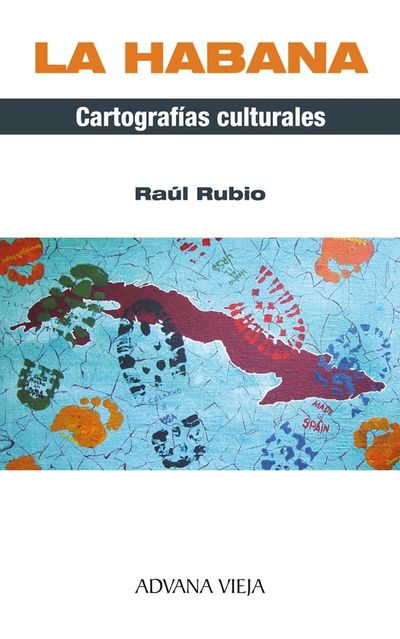
La Habana: cartografías culturales
Author: Raúl Rubio
Aduana Vieja, 2013.
ISBN: 9788496846845
Raul's monograph La Habana: cartografías culturales examines the worldwide fascination with Cuba and things Cuban during the last century, particularly envisioning how the city of Havana, is more than a scenic backdrop, having become the nation’s most visible protagonist and its foremost player, perhaps second only to Fidel Castro. It offers a cutting-edge approach to the intersections between Cuban politics, ideology, national identity, and artistic production, both on and off the island. Organized through studies on a wide-range of artistic mediums, including literature, film, photography, and material products that are manufactured not only in Cuba but also globally, the book offers an alternative take on the complex state of contemporary Cuban national identity. Raúl employs the perspective that, given Havana’s isolated reality, it is the city’s image, a simulated cartography, what has become highly desired and perpetually reproduced by media and cultural sources. Havana, in that light, is therefore mostly accessible to the world through artificial means, mechanically reproduced as nuanced copies of the real city. The monograph is the culmination of Raúl’s long-range research on Havana’s symbolic appearance in Cuban-oriented cultural production of the last century. The book features both previously published scholarship that originally appeared in English between 2005-2012 and new research based on recent theoretical approaches and analysis related to Raúl's long-range interest in Cuban material cultures.
Reviews:
- Juan-Navarro, Santiago. Studies in Latin American Popular Culture, V. 34, 2016, pp. 276-278.
- Damaris Puñales-Alpízar. Revista de Estudios Hispánicos, V. 50, no. 3, 2016, pp. 746-750.
- Cruz-Morgado, Luciano. Cincinnati Romance Review, V. 38, 2014, pp. 282-283.
Citations (Abbreviated):
- Arús, Maria Antonia. “The Life of Others: Collecting & Archiving the Cuban Surveillance Regime” in International Perspectives on Publishing Platforms: Image, Object, Text. Editor: Meghan Forbes (2018).
- Quesada, Catalina. “Slippages in Cuban Literature: Global Fictions” in Review: Literature and Arts of the Americas, Volume 51, Issue 1, p.21-27 (2018).
Edited Anthologies
Nubes: Antología de creación literaria
Anthologist: Raúl Rubio
Editors: Alessandra D’Agruma, Juanita Mejía Gutiérrez, Thomas Taylor
Editorial Isla Negra, 2025
ISBN 978-9945-666-04-5
A Spanish-language creative-writing anthology edited by Professor Raúl Rubio featuring twenty-nine works (in Spanish) from across The New School community – including students, faculty, and administrators. The featured authors are primarily students from Prof. Rubio's course “Storytelling in Spanish”– which was offered multiple times over the course of the last decade. The texts span a wide-range of genres, including short stories, first-person narratives, dialogue narratives, poetic and performance texts. Illustrations accompany the three sections of the volume.
As a grass-roots New School community project, commissioned by Prof. Rubio, a university-wide Editorial Board was tasked with the organization of the anthology and the evaluation of submissions. The Editorial Board was composed of three graduate students: Alessandra D’Agruma, Juanita Mejía Gutierrez and Thomas Taylor. At the university level, Prof. Rubio and the Editorial Board commissioned an additional review of the manuscript composed by one faculty member and one member of the Academic Administration Team before submitting it to Editorial Isla Negra, the intended press.
Based in Puerto Rico and the Dominican Republic, Editorial Isla Negra is a creative and academic press established over thirty-years ago. At the press, the manuscript underwent an additional review process with feedback provided by outside evaluators. Marian Sandoval Lemus, a graduate student at the New School for Social Research was commissioned to write the introductory essay included within the book.
Authors: Alessandra D’Agruma, Ana Sofía Navia, Ashlee Valle, Elisabeth Loua, Emma Crosswait, Florence Leclerc, Helena Grande, José García Escobar, Juanita Mejía Gutiérrez, Kenneth Sousie, Luis Galli, Marian Sandoval Lemus, Mariana Calcagno, Michell Kim, Michelle McCarthy, Paloma Rodríguez, Raúl Rubio, Thais Vitorelli, Thomas Taylor, Xin (Lindsey) Ning.
